
86th Annual MVCAC Conference – January 28-30, 2018; MVCAC Website Logins Update; 1/31/2018 Board Meeting Agenda Packet Posted; 2018 Sentinel Chicken Order Forms Available Now!; NPDES Permit Report Submissions; MVCAC 2018 Legislative Days; Training Grant Program Call for Proposals; CSDA Professional Development and SDLF Scholarship Opportunities; Agency Spotlight; District Trustee Information Form; MVCAC News Briefs – Zika Updates; MVCAC News Briefs – Other Outbreaks; Share Your News With Us!; Jobs Board; Sustaining Member Corner
It’s flu season, but don’t forget about Zika, says CDC official
From the Orlando Sentinel
January 18, 2018
An op-ed by Dr. Gary Brunette, Chief of the Center for Disease Control and Prevention’s Travelers’ Health Branch
The New Year is often a time when we focus on our health. We make resolutions to increase our physical activity and watch what we eat. How about being more aware of travel-related illnesses like Zika and taking steps to prevent them? That should be on your list, too. Whether you just returned from celebrating Three Kings with family and friends in Latin America or the Caribbean, or are planning a trip for Spring Break, now is the time to prevent Zika.
This an especially important time of year to remind pregnant women to protect their health and not travel to areas with a risk of Zika. Becoming infected with Zika during pregnancy can cause microcephaly and other severe birth defects.
The Centers for Disease Control and Prevention (CDC) wants you to know that Zika virus is still a major public health concern in many parts of the world. CDC recommends that U.S. travelers who are planning to visit Latin America or the Caribbean take action now to prevent contracting or spreading Zika, especially travelers who are planning to start a family in the near future. And those who recently returned from the region, if you are not feeling well, you should see a doctor and mention that you have recently traveled.
Mosquito agencies gear up for new challenges
From Westside Connect
January 18, 2018
Emerging trends in the ongoing campaign against mosquitoes and the viruses they transmit have area abatement experts gearing up for new challenges.
In the dead of winter – months ahead of peak mosquito season – officials with the Turlock and Merced County mosquito abatement districts are laying out their strategies for 2018.
New developments which surfaced last year are helping shape that planning.
The West Side saw substantial virus activity in 2017, according to David Heft, general manager of the Turlock district, and Rhiannon Jones, his counterpart with the Merced County district.
In addition to West Nile Virus activity, they told Mattos Newspapers, Saint Louis Encephalitis Virus (WELV) was detected in the Newman-Gustine area for the first time in several years.
That is not the only concern facing the mosquito-fighters.
Last summer, the Merced County Mosquito Abatement discovered the presence of the invasive Aedes aegypti mosquito – which can transmit Zike, dengue, chikungunya and yellow fever viruses – in the city of Merced.
Those developments leave the abatement agencies facing a dual challenge as they prepare for 2018 – particularly since the Aedes aegypti mosquito requires a far different eradication approach than that applied in the war against those which carry West Nile and SLEV.
Why are heaps of dead ants turning up in her bathroom?
From the Mercury News
January 18, 2018
DEAR JOAN: I have ants in my bathroom. My husband says they are looking for water, and I agree with him, however, when I find them, they aren’t there after I’ve showered.
I first noticed them in my bathroom about two months ago. I sprayed and didn’t see them for weeks and then I noticed about a dozen dead ants in one corner of my shower. I hadn’t sprayed in weeks.
Now, every three or four days, there is about a dozen dead ants. The other night I lifted the bath mat that is in front of the shower and found a small cluster of dead ants there, as well as the dozen or so in the corner of my shower.
I’m not a big fan of ants, but I’m starting to feel kind of bad for them. Any idea what could be causing this?
Pauline O’Connell, Bay Area
News Briefs 1.12.18
86th Annual MVCAC Conference – January 28-30, 2018; 1/31/2018 Board Meeting Agenda Packet Posted; 2018 Sentinel Chicken Order Forms Available Now!; MVCAC 2018 Legislative Days; CSDA Professional Development and SDLF Scholarship Opportunities; Agency Spotlight; District Trustee Information Form; MVCAC News Briefs – Zika Updates; MVCAC News Briefs – Other Outbreaks; Share Your News With Us!; Jobs Board; Sustaining Member Corner
BU medical student develops new solutions to stop spread of Zika virus
From EurekAlert!
January 11, 2018
(Boston) — Karen Cheng, a third-year medical student at Boston University School of Medicine (BUSM), has received a $3,500 award from the Clinton Global Initiative University Conference (CGIU) Innovation Fund for her work on creating effective methods to battle viruses such as Zika.
Rooftop water tanks are the prevailing source of potable water in developing nations. However, the stagnant water in these devices becomes a breeding ground for mosquitoes that spread a variety of viruses such as Zika. Cheng developed an affordable automated device that safely delivers larvicide and insecticide that kills the larvae of mosquitoes in these tanks.
Cheng also was recognized for her work developing new solutions to address the spread of Zika and related outbreaks at the Zika Medical Innovations Hackathon hosted by Massachusetts General Hospital/CamTech in 2016.
She is the community outreach chair for the BUSM Asian Pacific American Medical Student Association, which educates and translates for Mandarin speakers in outreach events that promote healthy lifestyles. She also is a part of the BUSM Student Oncology Society and serves as a student leader.
Memory loss from West Nile virus may be preventable
From Washington University School of Medicine in St. Louis
January 11, 2018
More than 10,000 people in the United States are living with memory loss and other persistent neurological problems that occur after West Nile virus infects the brain.
Now, a new study in mice suggests that such ongoing neurological deficits may be due to unresolved inflammation that hinders the brain’s ability to repair damaged neurons and grow new ones. When the inflammation was reduced by treatment with an arthritis drug, the animals’ ability to learn and remember remained sharp after West Nile disease.
“These memory disturbances make it hard for people to hold down a job, to drive, to take care of all the duties of everyday life,” said senior author Robyn Klein, MD, PhD, a professor of medicine at Washington University School of Medicine in St. Louis. “We found that targeting the inflammation with the arthritis drug could prevent some of these problems with memory.”
Light pollution may promote the spread of West Nile virus
From Science News
January 9, 2018
SAN FRANCISCO, CALIFORNIA—After the West Nile virus appeared on the U.S. East Coast in 1999, it spread across the entire country in just a few years, sickening thousands of people and striking down whole flocks of robins, crows, and other birds. Now, a new study suggests the mosquito-borne virus may have had an unexpected helper: light pollution. Birds infected with West Nile can spread the virus twice as long when they are exposed to night light, according to a study presented here over the weekend at the annual meeting of the Society for Integrative and Comparative Biology.
The work “shows that light pollution is not only bad for our [daily rhythms], but also can affect disease prevalence and transmission,” says Jenny Ouyang, an integrative physiologist at the University of Nevada in Reno. “Perhaps infection in humans and other animals is also affected by light,” adds Yale University epidemiologist Durland Fish. (Neither Ouyang nor Fish were involved in the study.)
West Nile is primarily a bird virus, but people occasionally get infected because some bird-biting mosquitoes dine on human blood as well. Human infections can cause fevers, body aches, rashes, diarrhea, long-term fatigue, and, in some cases, inflammation of the brain and its membranes. In the United States, almost 2000 people have died from West Nile since its arrival.
Scientists Race to Kill Mosquitoes Before They Kill Us
From Sierra Magazine
January 9, 2018
Since West Nile virus made its debut in New York City over a decade ago, outbreaks of mosquito-borne diseases, especially West Nile virus, have become increasingly commonplace. As temperatures reach new highs as a result of global climate change, mosquitoes that once called the tropics home find the United States just as habitable. A recent report from the Centers for Disease Control and Prevention found that Aedes aegypti—which is capable of transmitting the Zika, dengue, and chikungunya viruses—could find suitable breeding habitats in 75 percent of the contiguous United States.
Efforts to deal with the unwelcome vectors, however, are already running into trouble. In a poorly executed plan to suppress mosquitoes in South Carolina last year, officials in Dorchester County misted an insecticide called Naled—deadly to both honeybees and mosquitoes—through the air over Summerville without warning local beekeepers. The subsequent deaths of millions of bees served as a wake-up call that weapons beyond pesticides are needed to fight the spread of mosquito-borne diseases.
On Heels of First Los Angeles County Sexually Transmitted Zika Case, Council to Vote on Pasadena Representative for Mosquito Vector Control District Board
From Pasadena Now
January 8, 2018
[Updated] Nearly eight months after the City Council approved an application for Pasadena to join the San Gabriel Valley Mosquito and Vector Control District Board, and just days after the first sexually transmitted case of Zika was reported in Los Angeles County, Pasadena Public Health Dept. Environmental Health Services Division Manager Rachel Janbek will likely be confirmed Monday as the City of Pasadena’s official representative to the District.
For Pasadena Mayor Terry Tornek, the appointment could not come at a more important time. Historically, the local vector control district was mostly concerned with locating and eliminating standing water or abandoned pools, he said, a manageable task.
“But now,” Tornek said Friday, “with the advent of West Nile and Zika, and these are scary things, it’s become a much more serious enterprise. This is no longer in the classification of a nuisance. This is now in the classification of a potential public health emergency.”
Pasadena Public Health Director Michael Johnson had campaigned for the City to join the District last spring after determining that his department could not provide the proper training, equipment or supplies to monitor and combat adult mosquitoes that could potentially carry the West Nile and Zika viruses.
News Briefs 1.5.18
86th Annual MVCAC Conference – January 28-30, 2018; 2018 Sentinel Chicken Order Forms Available Now!; Alameda County Quarterly Newsletter and Updates; Agency Spotlight; District Trustee Information Form; MVCAC News Briefs – Zika Updates; MVCAC News Briefs – Other Outbreaks; Share Your News With Us!; Jobs Board; Sustaining Member Corner
Viruses have a big impact on our lives, and this podcast gives them their due
From The Washington Post
January 7, 2018
Ever ask yourself what’s the latest on viruses?
Don’t blame yourself if you haven’t. It’s easy to forget that the tiny particles, which hijack host organisms and use them to replicate, even exist. If you are sick, you are more likely to pay attention: Viruses are responsible for infections including the common cold, pneumonia and hepatitis.
Enter This Week in Virology, a podcast that makes it worth considering viruses more often. It’s hosted by Vincent Racaniello, a Columbia University professor, along with other virology experts.
Together, the team picks apart the latest news in virology and discusses big-name viruses, such as Zika, HIV and influenza. The show sheds light on a field that’s expanding all the time and that presents difficult questions to scientists.
One recent episode, “Call me fish meal,” tackles Bodo saltans. This giant virus — the largest ever seen — was first found in a freshwater pond in British Columbia. It infects a flagellated eukaryote, a hairy-looking microorganism that is common in water. One of just a handful of known giant viruses, Bodo saltans is challenging what scientists think they know about the infectious agents. The podcast gets into why, offering a fascinating look into the leviathan and the outsize mysteries it presents.
How Zika infection drives fetal demise
From Science Daily
January 5, 2018
When exposed to Zika virus before birth, mouse fetuses with the protein commit cell suicide, while fetuses without it continued to develop. The result, published January 5 in Science Immunology, suggests that the protein, a receptor involved in immune cell signaling, plays a role in spontaneous abortions and other human pregnancy complications.
The work could have implications for pregnant women infected with Zika or women with autoimmune disorders who are trying to have a baby, says study author Akiko Iwasaki, a Howard Hughes Medical Institute (HHMI) investigator and immunologist at Yale University.
“Pregnancy is a huge investment for a mother,” she says. “Our work shows how this signaling pathway works to terminate pregnancies that are not going to be viable early on.”
Zika virus is carried and transmitted by the Aedes aegypti mosquito and can also be spread during sex. Scientists have linked infections during pregnancy to stillbirths and birth defects such as microcephaly, where a baby’s head is abnormally small. Iwasaki and other researchers have been studying how signaling proteins called interferons defend the body against the virus.
“Interferons are one of the most potent antiviral factors the body generates,” Iwasaki says. When the body detects a virus, cells release interferons, which mount a rapid immune defense. Past studies have shown that adult mice lacking the receptor that binds two types of interferons, interferon-α and interferon-β, are highly susceptible to Zika. But the receptor’s effect on infected fetuses was unknown.
Mom-to-Be’s Immune Response May Trigger Zika Birth Defects
From U.S. News
January 5, 2018
FRIDAY, Jan. 5, 2018 (HealthDay News) — Zika might not directly cause the miscarriages and birth defects that have been associated with the notorious virus, a new study in mice suggests.
Instead, the ravaging effects of Zika infection on a developing fetus appear to stem from the immune response of the expecting mother, researchers said.
Lab mice bred without a key step in their immune response wound up birthing pups that survived Zika infection, while normal mice either lost their pregnancy or produced very underweight pups, the study found.
“The antiviral response generated in response to Zika infection is causing the miscarriage of the fetus, as opposed to the virus itself,” according to senior researcher Akiko Iwasaki. She is a professor of immunobiology at the Yale University School of Medicine. She is also an investigator for the Howard Hughes Medical Institute, in Chevy Chase, Md.
L.A. County officials confirm first case of sexually transmitted Zika virus
From The Los Angeles Times
January 4, 2018
L.A. County officials said Thursday that a woman had been infected with the Zika virus by her partner in the first case of sexually transmitted Zika virus in the county.
A man who lives in L.A. County traveled to Mexico and became infected with the Zika virus in early November, and shortly afterward his female partner, who didn’t travel to Mexico, also developed the infection, officials said.
“This case is a reminder to take precautions during sex or avoid sex if you or your partner have traveled to an area with risk of Zika,” said Dr. Jeffrey Gunzenhauser, L.A. County’s interim health officer.
Zika virus, which has caused hundreds of babies to be born with birth defects in Brazil, is most commonly transmitted by mosquitoes. The virus can also be transmitted through sex, though that’s much rarer.
Community gives gift of mobility to young West Nile survivor
From ABC 10
January 3, 2018
SAN DIEGO (KGTV) – A Carmel Mountain Ranch family is grateful for the gift of mobility after generous donations from the community.
10News shared the Keller’s story back in August when they were in need of modifying their van to make it wheelchair accessible, a $28,000 investment.
When she was 4-years-old, Jordan Keller was diagnosed with cancer. As she was finishing her fight she was bitten by a mosquito carrying West Nile. The virus hit her immunocompromised body extremely hard, leaving her unable to walk or talk.
As she grew older, traveling became difficult for the family. Jordan’s parents, Jen and Steve, had to lift both Jordan and the 75-pound wheelchair into their van.
Now, they don’t have to.
“To get that phone call to say you don’t have to worry anymore, it’s all going to be taken care of, I mean that was a huge relief,” said Jen.
Bye, bye birdie: Annual bird count tells a story
From WTOP
January 2, 2018
WASHINGTON — Some people bundle up to walk the dog or go for a run in freezing weather.
But across the D.C. region, thousands brave frigid temperatures for a chance to tally all the birds they can find during a 24-hour period. The practice is part of the Audubon Christmas Bird Count, a tradition that stretches back to 1901.
Janet Millenson of Potomac, tallied the data taken by the Sugarloaf Mountain count. Her team was out on Sunday, the coldest December day since 1989.
In a feat of understatement, Millenson said the day was “unpleasantly cold” and joked that teams of birdwatchers who spread out over a 15-mile diameter route were still thawing out.
“I actually feel guilty; I feel as the compiler of the data I ought to arrange nice weather,” she said.
The types of birds spotted can indicate what’s going on in the environment due to habitat loss, climate change or even outbreaks of things such as West Nile virus, according to Millenson.
News Briefs 12.29.17
IT Survey and GIS Survey; CDPH “Don’t Bring Zika Home” Materials Now Available!; 86th Annual MVCAC Conference – January 28-30, 2018; 2018 Sentinel Chicken Order Forms Available Now!; 2017 Proceedings & Papers; Agency Spotlight; District Trustee Information Form; MVCAC News Briefs – Zika Updates; MVCAC News Briefs – Other Outbreaks; Share Your News With Us!; Jobs Board; Sustaining Member Corner
Genetic Changes Help Mosquitoes Survive Pesticide Attacks
From UCR Today
January 2, 2018
RIVERSIDE, Calif. (www.ucr.edu) — For decades, chemical pesticides have been the most important way of controlling insects like the Anopheles mosquito species that spreads malaria to humans. Unfortunately, the bugs have fought back, evolving genetic shields to protect themselves and their offspring from future attacks.
The fascinating array of genetic changes that confer pesticide resistance in Anopheles mosquitoes is reviewed in an article published today in Trends in Parasitology. The paper is written by Colince Kamdem, a postdoctoral scholar, and two colleagues from the Department of Entomology at the University of California, Riverside. The findings highlight the interplay between human interventions from pest control companies like pest control san diego, mosquito evolution, and disease outcomes, and will help scientists develop new strategies to overcome pesticide resistance. The pest control puyallup can help with getting rid of pest menace.
In 2015, there were roughly 212 million malaria cases and an estimated 429,000 deaths due to malaria, according to the World Health Organization. While increased prevention and control measures have led to a 29 percent reduction in malaria mortality rates globally since 2010, the increase in pesticide resistant insects underscores the need for new strategies.
Most Texas cases of Zika are travel-related
From FOX 15
December 28, 2017
ABILENE, TX – West Texas is being hit by a cold front, bringing unfriendly temperatures for mosquitos. But Texas health officials are still concerned with the zika virus.
“Most cases of zika that have been reported in 2017 in Texas have been travel related,” says Dr. Jennifer Shuford, Infectious Disease Medical Officer for the Texas Department of State Health Services.
Dr. Shuford says 47 cases of zika were reported in Texas this year. But in 45 cases, the carriers had one thing in common.
“Then they are diagnosed once they’re back in Texas. But they actually didn’t get the infection here. They got it while they were traveling,” says Dr. Shuford.
Although most of the cases are due to mosquito transmission. There are other ways to contract the virus.
News Briefs 12.22.17
86th Annual MVCAC Conference – January 28-30, 2018; Agency Spotlight; 2018 Sentinel Chicken Order Forms Available Now!; 2017 Proceedings & Papers; Submit your district for the next Agency Spotlight; District Trustee Information Form; MVCAC News Briefs – Zika Updates; MVCAC News Briefs – Other Outbreaks; Share Your News With Us!; Jobs Board; Sustaining Member Corner
Health department issues warning on Zika virus
From the Turlock Journal
December 26, 2017
Even though the weather has turned colder and there are fewer mosquitos flying around, the Zika virus remains a serious public health concern in California.
As of Dec. 1, there have been 619 cases in California, with 10 just this month, according to the Stanislaus County Health Services Agency. So far in California, Zika virus infections have been documented only in people who were infected while traveling to areas with ongoing Zika transmission, through sexual contact with an infected traveler, or through maternal-fetal transmission during pregnancy.
While the species of mosquito that carries the Zika virus, is not native to California, it has been detected in an increasing number of counties throughout the state.
Zika is carried by the Aedes aegypti mosquito, which is known to be in the San Joaquin Valley. The Centers for Disease Control and Prevention says this type of mosquito is an aggressive day biter, but also known to bite at night. An Aedes mosquito can only transmit Zika virus after it bites a person who has this virus in their blood.
Most people testing positive for Zika will have mild to no symptoms. The most common symptoms include fever, rash, conjunctivitis (red eyes), and joint pain and begin three to seven days after being bitten.
Severe illness requires supportive care at a hospital. There is no vaccine or cure for Zika.
The virus is of most concern to pregnant women or women considering getting pregnant in the near future. Zika virus during pregnancy can cause microcephaly and other severe brain defects in infants. Additionally, there is an association between Zika and Guillain-Barré Syndrome, a disease affecting the nervous system.
Tick population on the rise in Butte County
From ChicoER
December 25, 2017
With the arrival of cool and wet weather, ticks that may be carrying Lyme disease and other tick-borne diseases are becoming more active in Butte County.
Increased populations of the Western black-legged tick (Ixodes pacificus), sometimes referred to as the deer tick, have been detected along trails in Chico’s Bidwell Park and in the Lake Oroville Recreation Area by the Butte County Mosquito and Vector Control District.
Ticks attach to people and animals and feed on their blood over several days. If the tick is infected with the bacteria that causes Lyme disease, it can pass it on to its host.
Other tick-borne diseases include Rocky Mountain spotted fever, anaplasmosis, erlichiosis and babesiosis.
Most tick-borne diseases begin with flu-like symptoms that usually develop 2 to 14 days after being bitten. Some people with Lyme disease or Rocky Mountain spotted fever develop a rash. If someone becomes ill with flu-like symptoms after spending time in tick areas or being bitten by a tick, they should see their doctor right away.
CDPH “Don’t Bring Zika Home” Materials Now Available!
The updated statewide Zika prevention materials and toolkits are now available for download at ZikaFreeCA.com. The toolkits include a 30-second PSA video, fliers, social media graphics and more. Support from local districts in sharing the Zika prevention message is greatly appreciated! Please feel free to reach out to Lisa Yarbrough at lyarbrough@ka-pow.com with any questions or to request printed materials.
Targeting invasive mosquitoes… at the cemetery?
From Fox26
December 20, 2017
Flowers at gravesites help us pay tribute to loved ones – and even celebrate holidays with them.
But the final resting place for so many can also be a breeding ground for mosquitoes.
“If you add up all the graves and tombstones and items that are there, it adds up to hundreds of thousands of containers that are potential breeding issues,” says Ryan McNeil, District Manager for Fresno Mosquito and Vector Control District.
It’s leading the fight against the invasive species of mosquito known as Aedis Aegypti — the same mosquito that’s been known to carry the Zika Virus and Dengue.
“There are some very real diseases that are for the first time in Fresno County. Not just from people traveling to Mexico or India,” McNeil says.
He says that people need to start exercising the same caution they take in the summer, by emptying standing water.
This mosquito species thrives in cold weather, too.
“We have found them in everything from vases to unused flower pots to even bottle caps left right side up with rain in it,” McNeil says.
CDC study reveals lasting impact of Zika virus
From CBS News
December 19, 2017
While the threat from the Zika crisis has calmed, the Centers of Disease Control and Prevention released a study last week exploring the effects of the virus on babies born with brain damage from the virus, who are now toddlers. Pam Belluck from The New York Times joins CBSN to discuss the lasting impact of the Zika virus on toddlers.
Disease-bearing mosquitoes adapt to winters near D.C. lawmakers
From Yale News
December 18, 2017
Near Capitol Hill in Washington D.C., a population of mosquitoes capable of transmitting tropical diseases is hunkering down for a sixth straight winter. A new study of this group of Aedes aegypti shows they originated in Florida and, unlike their brethren in warmer climes, survive in storm drains until emerging again in spring.
The adaptability to higher latitudes of these mosquitoes, known to have transmitted dengue and Zika in Florida, “may be a harbinger of things to come,” said Yale’s Jeffrey Powell, professor of ecology and evolutionary biology and senior author of the study appearing Dec. 18 in the American Journal of Tropical Medicine and Hygiene.
No known cases of locally transmitted dengue, Zika, or chikungunya have been reported in Washington, but the mosquito species “has already shown it can transmit disease in modern urban settings,” Powell said.
Bordering on an Outbreak
From the Texas Observer
December 18, 2017
Brownsville can’t afford a Zika outbreak,
but it also can’t afford to prevent one.
At the Mary P. Lucio Health Center one July afternoon, Esmeralda Treto gets the news she is hoping for: Treto, a 34-year-old mother of two, is pregnant with her third child. But for medical staff at the Brownsville clinic, Treto’s visit is also a chance to give the expectant mother a test for the Zika virus and educate her about the disease. On this day, the staff has its hands full. “We have another one!” a nurse shouts from the next room, as she shuttles a second pregnant woman into the room to join us. The place is bustling with patients, many of whom rarely see nurses or doctors. For public health workers on the front lines of the fight against Zika in Brownsville, where at least two babies were born with microcephaly in the last year, a single encounter with a patient can make all the difference.
Treto didn’t know she could contract Zika from a sexual partner. She didn’t know what the symptoms look like, or that only 20 percent of patients show any sign of infection at all. Though she knew the virus is transmitted by mosquitoes, she was unclear on how to protect herself.
News Briefs 12.15.17
IT Survey and GIS Survey; 86th Annual MVCAC Conference – January 28-30, 2018; 2018 Sentinel Chicken Order Forms Available Now!; 2017 Proceedings & Papers; Agency Spotlight; District Trustee Information Form; MVCAC News Briefs – Zika Updates; MVCAC News Briefs – Other Outbreaks; Share Your News With Us!; Jobs Board; Sustaining Member Corner
Problems for some babies with Zika continue long after birth
From the PBS News Hour
December 14, 2017
Children born with congenital Zika infection and diagnosed with microcephaly face severe health and developmental challenges as they age, a new study has found, suggesting that complications from the virus affect babies long after birth.
The study, published today by the Centers for Disease Control and Prevention, the State Health Secretariat of Paraiba and the Ministry of Health of Brazil, attempted to present a clearer picture of the long-term challenges that will affect children born with smaller-than-expected head sizes, or microcephaly, during the Zika outbreaks in Brazil and elsewhere. Previous publications have described the health effects infants faced during the Zika outbreak, but today’s study was the first attempt to provide a more comprehensive view of the problems they experienced around age 2.
The investigation focused on Brazil, where thousands of children born during 2015 and 2016 were affected by the virus. It studied the health and development of 19 children with microcephaly and evidence of congenital Zika virus through clinical assessments, medical record reviews and caregiver interviews.
Zika cases are down, but researchers prepare for the virus’s return
From Science News
December 13, 2017
One of the top stories of 2016 quietly exited much of the public’s consciousness in 2017. But it’s still a hot topic among scientists and for good reasons. After Zika emerged in the Western Hemisphere, it shook the Americas, as reports of infections and devastating birth defects swept through Brazil and Colombia, eventually reaching the United States. In a welcome turn, the number of Zika cases in the hemisphere this year dropped dramatically in the hardest-hit areas.
But few scientists are naïve enough to think we’ve seen the last of Zika. “The clock is ticking for when we will see another outbreak,” says Andrew Haddow, a medical entomologist at the U.S. Army Medical Research Institute of Infectious Diseases in Frederick, Md.
Researchers’ to-do list for tackling this once-unfamiliar virus is daunting. But progress has been made, especially in learning more about Zika’s biology and interactions with its hosts, and in developing a safe and effective vaccine.
Drug blocks Zika, other mosquito-borne viruses in cell cultures
From Stanford Medicine News Center
December 12, 2017
If there was a Mafia crime family of the virus world, it might be flaviviruses.
Dengue, Zika, West Nile and yellow fever virus — to name the more notorious public health gangsters of this clan — are all mosquito-borne flaviviruses, and they’re notoriously hard to take out. Researchers struggle to find drugs to combat just a single flavivirus at a time.
Now, researchers at the Stanford University School of Medicine have discovered a way to block a handful of members of the family at once. The approach, rather than killing the viruses directly, is akin to cutting off a crime family’s bank accounts: It revolves around inhibiting access to a complex of proteins in mammalian cells on which the viruses rely when they invade.
“Generally, when you develop a drug against a specific protein in dengue virus, for instance, it won’t work for yellow fever or Zika, and you have to develop new antivirals for each,” said Jan Carette, PhD, assistant professor of microbiology and immunology and senior author of the paper, which was published Dec. 12 in Cell Reports. “Here, by targeting the host rather than a specific virus, we’ve been able to take out multiple viruses at once.”
Texas Zika Researchers Studying Infected Primates To Help Prevent Birth Defects
From Texas Public Radio
December 11, 2017
Scientists at Texas BioMedical Research Institute in San Antonio are using a type of primate to help prevent birth defects caused by the Zika virus.
Texas BioMed is using four marmosets as its animal model for Zika infection. Virologist Dr. Jean Patterson said Zika infection in marmosets is similar to that in humans.
“Like humans, they develop almost immediate Viremia — meaning they have virus in their blood — and, for the males, after the virus declines in blood it then goes into semen, saliva and blood,” she said.
Zika is primarily passed through mosquito bites but can also be transmitted through sexual intercourse in humans, as well as marmosets.
The Centers for Disease Control and Prevention lists Zika during pregnancy as a cause of microcephaly, in which a baby is born with a head much smaller than normal.
County resident sickened by mosquito transmitted virus
From The Turlock Journal
December 8, 2017
The Stanislaus County Health Services Agency has confirmed that the county has seen its first case of the St. Louis encephalitis virus with the diagnosis of a male county resident in his 70s.
“He had symptoms and was tested in September,” said Stanislaus County Public Health Officer Dr. Julie Vaishampayan. “Confirmatory testing was performed first by the California Department of Public Health, followed by the Centers for Disease Control and Prevention.”
The diagnosis marks the second confirmed case of the virus in a person in California for the year.
The East Side and Turlock Mosquito Abatement Districts received confirmation in August that a mosquito sample from Stanislaus County has tested positive for St. Louis Encephalitis virus, which is similar to West Nile Virus and carried by the same type of mosquitoes.
This was the first time the virus had been detected in the area for more than 40 years. As of now, the virus has been found in mosquitoes in 14 California counties.
St. Louis encephalitis virus was recognized in California in 1937 and caused periodic epidemics in humans and horses until 1989, according to the Centers for Disease Control and Prevention.
Still a threat: encephalitis case revealed in Stanislaus County
From the Modesto Bee
December 6, 2017
It turns out that a Stanislaus County man who became sick in September was stricken by St. Louis encephalitis, a virus that has reappeared in the Northern San Joaquin Valley this year.
The county Health Services Agency made the case public Wednesday but did not identify the individual, who is in his 70s.
Like the West Nile virus, the St. Louis disease is transmitted by mosquitoes. Both of the viruses may cause encephalitis, or inflammation of the brain, in people who are infected.
The Stanislaus County man had symptoms on and off for a month and was not hospitalized. He suffered from fatigue, fever and abdominal pain and sought care from his physician, said Anuj Bhatia, a Health Services Agency spokesman.
Samples of his blood were tested. Additional tests to confirm the virus were done by the state Department of Public Health and Centers for Disease Control and Prevention.
The county health agency had to wait for the verification tests before reporting the case, Bhatia said. The local man was the second person to test positive for St. Louis encephalitis in California this year.
California had three cases of St. Louis encephalitis illness last year. Mosquitoes have tested positive for the virus in counties in the San Joaquin Valley and other places in Southern California in 2017.
In August, St. Louis encephalitis was detected in Stanislaus County for the first time in decades. Mosquito abatement districts stopped seeing the virus after West Nile took hold in California about 15 years ago.
David Heft, general manager of Turlock Mosquito Abatement District, said a small amount of St. Louis encephalitis activity was detected in Culex mosquitoes near Grayson and Newman, where most of the river flooding occurred last winter.
SMC Residents Reminded of Tick-Borne Illness Risk
From The Menlo Park Patch
December 5, 2017
From SMCMVCD: Officials at San Mateo Mosquito and Vector Control District (SMCMVCD) remind residents that winter is the season for the western black-legged tick (Ixodes pacificus), also known as the deer tick. This tick is the primary vector for Lyme disease and other common tick-borne illnesses.
Results from the District’s 2016/2017 tick-borne disease surveillance program indicate that up to 3% of ticks collected in San Mateo County are infected with bacteria capable of causing illness in humans. This is consistent with previous years’ data for San Mateo County. “Although the risk of encountering an infected tick in our area is much lower than on the east coast, it is still very possible to contract Lyme disease, anaplasmosis, or other diseases from ticks in this county,” said San Mateo Mosquito and Vector Control District Laboratory Director Angie Nakano.
The District recommends that residents and visitors continue to take precautions against tick bites when engaging in outdoor activities. Basic precautions against tick-borne illness include:
- Wear light-colored clothing and long sleeves and pants
- Tuck in clothing to keep ticks off your skin
- Use an EPA-registered tick repellent
- Walk in the center of the trail, and avoid contact with brush, tall grass, and leaf litter
- Check carefully for ticks after outdoor activities
- Remove ticks promptly and correctly; never crush, burn, smother, or twist an attached tick
- Consult a health professional if unable to completely remove a tick, or if a rash or fever develops after exposure to a tick
“I would never discourage anyone from enjoying the outdoors,” said the District’s Public Health Education and Outreach Officer, Megan Sebay. “Fortunately a few simple precautions can prevent most tick bites and keep your risk of tick-borne illness low.”
For more information on ticks in San Mateo County, contact the San Mateo Mosquito and Vector Control District at (650) 344-8592 or visit www.smcmvcd.org/ticks.
How bug-delivering drones are helping defeat deadly diseases
From NBC News
December 5, 2017
Humans have been trying to conquer malaria, Zika, dengue, and other mosquito-borne diseases for centuries. But with malaria alone still claiming more than 1 million lives every year, it’s clear we have a long fight ahead.
But now there’s a new weapon in the war against mosquitoes, and it’s not a vaccine or a new insecticide — it’s aerial drones.
On the east African island of Zanzibar, drones are being used to map the small, often hidden pools of water where mosquitos breed, so they can be sprayed to kill larvae before they mature.
At Rutgers University in New Jersey, engineers are developing “skeetercopters” that can detect and map mosquito-infested sites from the air — and douse them with insecticide.
News Briefs 12.01.17
2018 William C. Reeves New Investigator Award Applications Due 12/1/17; IT Survey and GIS Survey;Contra Costa MVCD Mosquito Bytes Newsletter; 86th Annual MVCAC Conference – January 28-30, 2018;Agency Spotlight; District Trustee Information Form; MVCAC News Briefs – Zika Updates; MVCAC News Briefs – Other Outbreaks; Share Your News With Us!; Jobs Board; Sustaining Member Corner
Gene-Based Zika Vaccine is Safe and Immunogenic in Healthy Adults
From NIH – National Institute of Allergy & Infectious Diseases
December 4, 2017
Results from two Phase 1 clinical trials show an experimental Zika vaccine developed by government scientists at the National Institute of Allergy and Infectious Diseases (NIAID), part of the National Institutes of Health, is safe and induces an immune response in healthy adults. The findings will be published on Dec. 4 in The Lancet. NIAID is currently leading an international effort to evaluate the investigational vaccine in a Phase 2/2b safety and efficacy trial.
“Following early reports that Zika infection during pregnancy can lead to birth defects, NIAID scientists rapidly created one of the first investigational Zika vaccines using a DNA-based platform and began initial studies in healthy adults less than one year later,” said NIAID Director Anthony S. Fauci, M.D. “NIAID has begun Phase 2 testing of this candidate to determine if it can prevent Zika virus infection, and the promising Phase 1 data published today support its continued development.”
Investigators from NIAID’s Vaccine Research Center (VRC) and Laboratory of Viral Diseases, part of the Division of Intramural Research, developed the investigational vaccine, which includes a small, circular piece of DNA called a plasmid. Scientists inserted genes into the plasmid that encode two proteins found on the surface of the Zika virus. After the vaccine is injected into muscle, the body produces proteins that assemble into particles that mimic the Zika virus and trigger the body to mount an immune response.
Where does West Nile virus go in winter?
From Bio Med Central
December 1, 2017
News of West Nile virus (WNV) first hit the popular press in 1999 when cases of infection in humans were identified in Queen’s, New York, USA. It quickly spread across the whole of the US, carried by infected birds, and 3 million people are estimated to have been infected between 1999 and 2010. Since then more outbreaks have occurred in the US, typically in August and September. However, sporadic outbreaks occurred in Europe before this, and still do. Its geographic range is expanding in Europe, causing increasing numbers of epidemics.
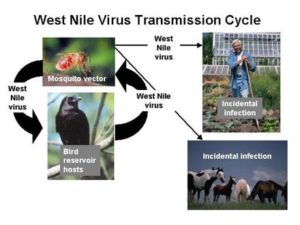
WNV was first discovered in the West Nile district of Uganda. It is a flavivirus that is transmitted by mosquitoes in the genus Culex, that have fed on infected birds. While this is the natural transmission cycle, horses and humans can also be infected. Most humans infected with the virus are symptomless, but it can cause a fever, headache and rash (West Nile Fever). However, in less than 1% of cases the virus infects the nervous system causing severe symptoms, that can result in death. Horses are particularly susceptible to infection, and it can be fatal in up to 40% of cases.
To combat the spread of Zika, a nonprofit is using drones and sterile mosquitoes
From PRI
November 30, 2017
Mosquitoes are, by far, the deadliest animals on Earth. More than 725,000 people die from mosquito-borne illnesses like malaria each year, and millions are affected by mosquito-borne illnesses, according to the World Health Organization.
Now new technology is being used to try to reduce mosquito-borne illnesses. In particular, introducing sterile male mosquitoes to a population can increase competition for female mosquitoes, eventually reducing the population by as much as 90 percent, according to researchers.
But introducing the mosquitoes to areas affected by mosquito-borne diseases can be a challenge.
“Not everybody lives next to a road. Even if roads do exist in some of these areas, they look very different when the rainy seasons hit. … And of course when it rains … you have pools of standing water and even more mosquitoes,” says Patrick Meier, executive director and co-founder of WeRobotics, a nonprofit with offices in the US and Switzerland.
So Meier and his team are testing a unique delivery method, too: drones.
Rapid Zika Test Possible For 2018
From WLRN
November 29th, 2017
Hospitals and health departments could have a new tool in 2018 to detect Zika – a test that is cheap, portable and fast.
The test involves a drop of blood, can get results in 20 minutes and doesn’t require blood be sent out to a lab. It was developed by a team of University of Central Florida researchers led by Qun Treen Huo.
Huo said the test is ideal for rural and low-income areas because it’s cheap and portable.
“We really want to put this test for rural area that don’t have access to expensive lab facility,” Huo says. “It’s a very simple test, does a quick test, our device is portable as well.”
Nano Discovery, a spinoff biotech company out of the University of Central Florida, said the test involves gold nanoparticles that are used to detect the Zika virus in a few drops of blood. The company also manufactures the machines that do the test.
BUTTE COUNTY RESIDENTS CAUTIONED AGAINST TICKS
From Action News Now
November 28, 2017
With the arrival of cool and wet weather, ticks of medical concern are now active again.
Butte County residents need to be alert for ticks that may be carrying Lyme disease and other tick-borne diseases.
Butte County Mosquito and Vector Control District’s recent surveillance activities on Chico’s Bidwell Park trails and the Lake Oroville Recreation Area trails have identified increased populations of the western black-legged tick, also referred to as the deer tick.
The District wants to remind residents to take precautions while hiking, camping, biking, and enjoying other outdoor activities.
Ticks are often found in naturally vegetated areas throughout Butte County.
Ticks prefer cool and moist environments like on grasses, shrubs, logs, branches, fallen leaves, and on wooden picnic tables.
Here are some things to remember:
• Avoid areas where ticks live, such as trail margins, brushy and grassy areas, and leaf litter.
• Stay on trails and avoid contact with high grass and brush
• Wear light colors so ticks can be easily seen if they get on you
• Wear long pants and long-sleeved shirts when possible.
• Use insect repellent with at least 20% DEET on exposed skin and clothing. Always read and follow label directions when applying repellents.
• Treat your clothing, socks, and shoes/boots with permethrin. Permethrin kills any ticks that climb on your body.
• Pack a pair of tweezers or a tick removal tool when hiking in tick areas.
• thoroughly check yourself and your children frequently for ticks, especially at the hairline and base of the scalp
• routinely check pets for ticks and remove them promptly; check with your veterinarian for tick control products
Zika Nerve Damage May Stem From Body’s Response to the Virus
From U.S. News
November 27, 2017
Nerve-related complications of Zika infection may be caused by the immune system’s response to the virus, not the virus itself, according to a new study.
Zika is spread primarily via the bite of an infected mosquito, but it may also be transmitted by blood transfusion or sexual contact. Most people who become infected don’t have any symptoms, but some develop serious neurological conditions. And an infection during pregnancy can cause devastating birth defects.
The researchers said their findings, based on experiments with mice, may help lead to new ways to treat people with Zika-related nerve complications, such as Guillain-Barre syndrome.
The syndrome can cause muscle weakness, tingling and even paralysis.
The Yale University research team found that when Zika infection spreads from the blood to the brain in mice, immune cells flood the brain. This limits the infection of brain cells, but it can also trigger paralysis.
News Briefs 11.22.17
IT Survey and GIS Survey; 2018 William C. Reeves New Investigator Award Applications Due 12/1/17; Agency Spotlight; 86th Annual MVCAC Conference – January 28-30, 2018; District Trustee Information Form; MVCAC News Briefs – Zika Updates; MVCAC News Briefs – Other Outbreaks; Share Your News With Us!; Jobs Board; Sustaining Member Corner
Rough lessons can lessen the pull of human scent on a mosquito
From Science News
November 27, 2017
DENVER – After unpleasant lessons in the lab, mosquitoes can learn some restraint in their zest for pursuing the scent of human skin.
The test, a kind of aversion therapy for mosquitoes to see if they can associate smells with bad experiences, was reported at the annual Entomological Society of America meeting.
“Mosquitoes have this very challenging task of finding food that’s hidden under the skin of mobile and defensive hosts,” said Clément Vinauger of Virginia Tech in Blacksburg. He’s investigating whether repeated scares such as near misses of a slapping hand might change mosquito reactions to odors.
Female mosquitoes go about their dangerous blood quest by tracking a mix of cues: plumes of carbon dioxide, the sight of looming objects, up-close body heat and body scent (SN: 8/22/15, p. 15). The final targeting can be annoyingly picky. Even within the same target species, such as humans, some individuals turn out to be mosquito magnets, while others aren’t so alluring.
Vinauger and colleagues wafted odors over Aedes aegypti mosquitoes during 10 rounds of 30-second educational shaking in a small cage. Outside the lab, slapping at a mosquito may not seem to discourage the relentless return of the whining, but the test setup found an effect.
Rainfall Can Indicate That Mosquito-Borne Epidemics Will Occur Weeks Later
From Newswise
November 21, 2017
A new study demonstrates that outbreaks of mosquito-borne viruses Zika and Chikungunya generally occur about three weeks after heavy rainfall.
Researchers also found that Chikungunya will predominate over Zika when both circulate at the same time, because Chikungunya has a shorter incubation period — just two days, versus 10 days for Zika. The latter finding explains why a late-2015 Zika epidemic in Rio de Janeiro ended while the number of Chikungunya cases increased in February 2016.
BACKGROUND
Viruses transmitted by insects can lead to serious health repercussions. Zika is linked to birth defects, and up to 1 percent of Zika infections result in Guillain-Barre syndrome, a form of paralysis. Chikungunya can cause arthritis.
The researchers aimed to identify the environmental drivers of these epidemics to create a framework for predicting where and when future outbreaks could occur.
METHOD
The researchers screened 10,459 blood and urine samples for Chikungunya, dengue and Zika from residents of 48 municipalities in the state of Rio de Janeiro. They tracked dates of major rainfalls, assessed the geographic distribution of mosquito-borne virus incidence in cities and neighborhoods and the timing of epidemics. They confirmed 1,717 cases of Zika infection, 2,170 cases of Chikungunya and 29 cases of dengue. Zika occurred more commonly in neighborhoods with little access to municipal water infrastructure; the incidence of Chikungunya was weakly correlated with urbanization, such as the density of buildings.
News Briefs 11.17.17
IT Survey and GIS Survey; 2018 William C. Reeves New Investigator Award Applications Due 12/1/17; Agency Spotlight; 86th Annual MVCAC Conference – January 28-30, 2018; District Trustee Information Form; MVCAC News Briefs – Zika Updates; MVCAC News Briefs – Other Outbreaks; Share Your News With Us!; Jobs Board; Sustaining Member Corner
Zika-related nerve damage caused by immune response to the virus
From Yale News
November 20, 2017
The immune system’s response to the Zika virus, rather than the virus itself, may be responsible for nerve-related complications of infection, according to a Yale study. This insight could lead to new ways of treating patients with Zika-related complications, such as Guillain-Barré syndrome, the researchers said.
In mice models lacking a key antiviral response, infection with Zika virus causes paralysis and death. To understand the mechanism, a research team led by immunobiologist Akiko Iwasaki examined the spread of infection in these mice.
The research team found that when the Zika infection spreads from the circulating blood into the brain, immune cells known as CD8 T cells flood the brain. While these T cells sharply limit the infection of nerve cells, they also trigger Zika-related paralysis, the researchers said.
“The immune cells that are generated by infection start attacking our own neurons,” Iwasaki said. “The damage is not occurring through the virus infection, but rather the immune response to the virus.”
Drug Used To Treat Malaria Could Help Fight Zika’s Damaging Effects
From CBS Miami
November 20, 2017
MIAMI (CBSMiami) — A drug used to prevent and treat malaria could also help fight the Zika virus, according to research published Monday.
It’s called chloroquine and it’s been used since the 1950s, researchers said.
Dr. Angela Rocha (C), pediatric infectologist at Oswaldo Cruz Hospital, examines Ludmilla Hadassa Dias de Vasconcelos (2 months), who has microcephaly, on January 26, 2016 in Recife, Brazil. (Mario Tama/Getty Images)
The drug is easily available, low in cost and has a history of being safe to use during pregnancy.
Researchers say the drug, when tested on pregnant mice, significantly reduced the amount of the virus in maternal blood and certain cells in the fetus’s brain.
It’s a good sign since the virus is considered a major global health risk, especially for pregnant women.
They’re most at risk since the virus causes serious birth defects like microcephaly – a defect that has no way to reverse or treat.
“Although chloroquine didn’t completely clear Zika from infected mice it did reduce the viral load, suggesting it could limit the neurological damage found in newborns infected by the virus,” said Alexey Terskikh, Ph. D., who co-authored the study which was published in Scientific Reports.