Public Health Pesticides are Evaluated and Regulated by State and Federal Agencies
The U.S. Environmental Protection Agency (EPA) evaluates pesticides to make sure they are safe, effective, and do not pose unreasonable risks to human health and the environment. The California Department of Pesticide Regulation (DPR) also regulates pesticide products used in the state.
Before a pesticide can be legally sold or used in California, both EPA and DPR check that the product’s label and application instructions are clear and, when the application instructions are followed, the pesticide does not harm the health of people or the environment. DPR also closely tracks pesticide use by registered applicators in California and monitors pesticide levels in the air, surface water, and groundwater.
CA Department of Public Health Certifies Vector Control Employees Using Public Health Pesticides
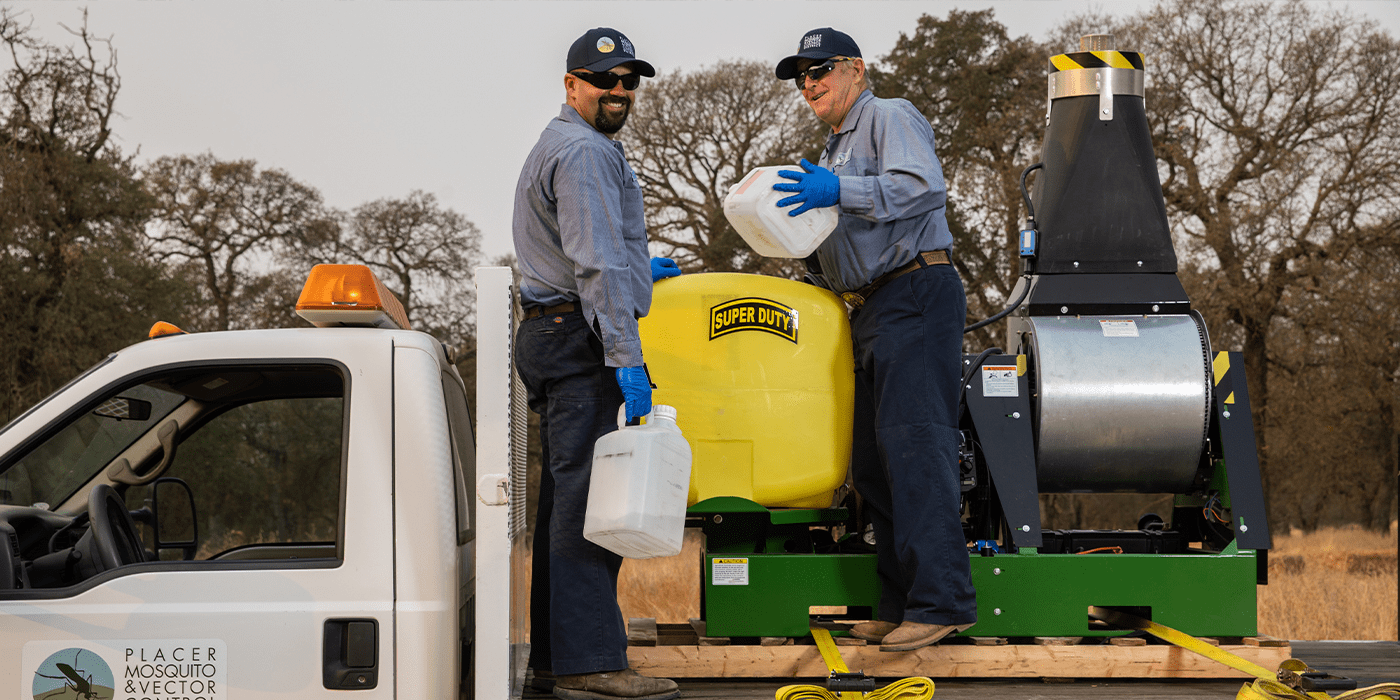
Under California law every vector control agency employee who handles, applies, or supervises the use of any public health pesticide in California must be certified by the California Department of Public Health (CDPH). CDPH oversees and maintains a vector control technician certification program, which requires taking and passing an exam on vectors in California and how to safely apply pesticides for public health purposes. Once certified, technicians are required to complete yearly continuing education to maintain their certification.
Public Health Pesticides are Needed to Control Mosquitoes at Different Life Stages
There are two main types of public health pesticides used to control mosquitoes: larvicides and adulticides. These pesticides target different life stages of mosquitoes.
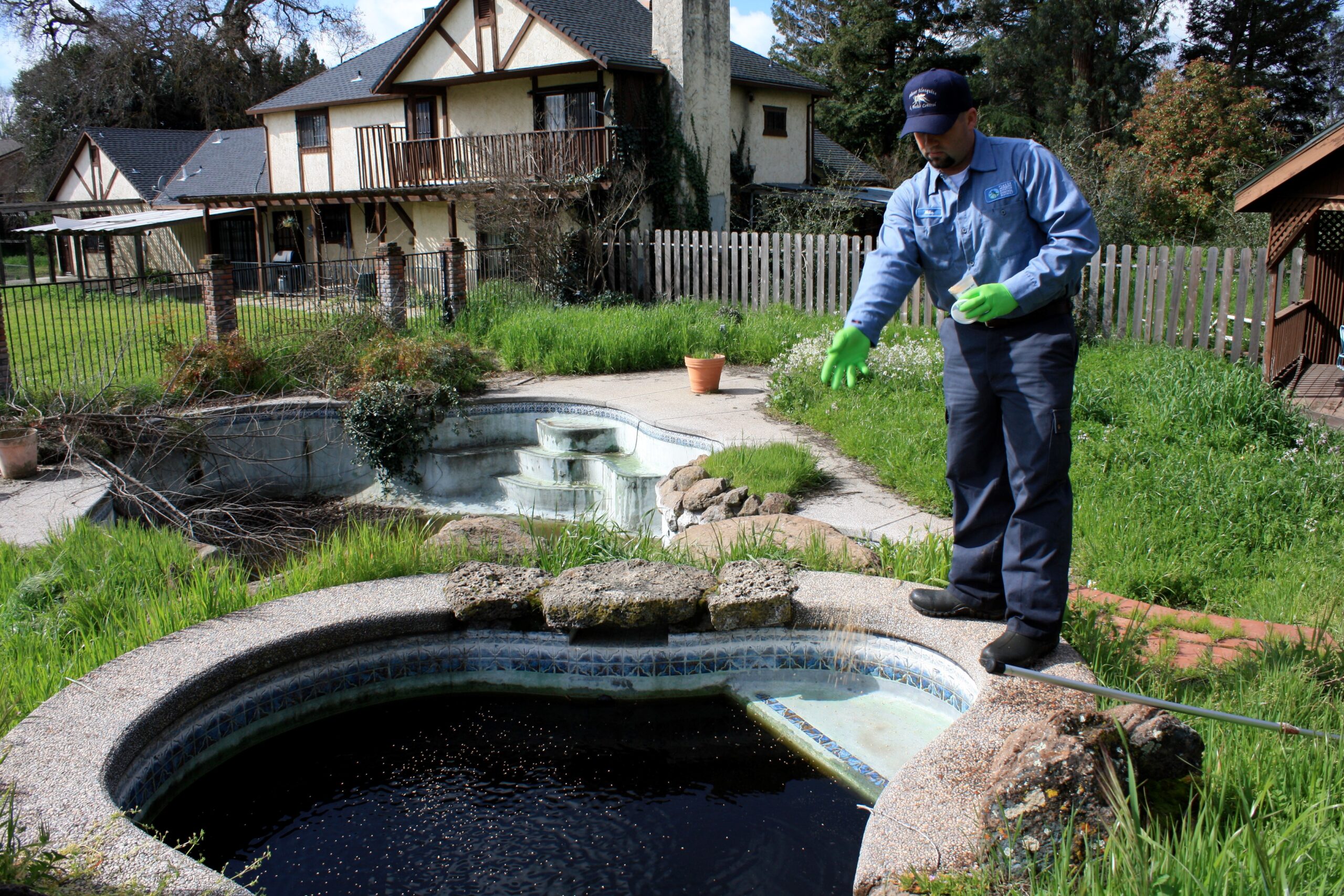
Larvicides are pesticides that target immature, larval stages of mosquitoes. Larvicides are applied to water sources where mosquitoes lay eggs and larvae develop.
Using larvicides eliminates mosquitoes early in their development process before they become flying adult mosquitoes that can feed on humans or animals and spread diseases.
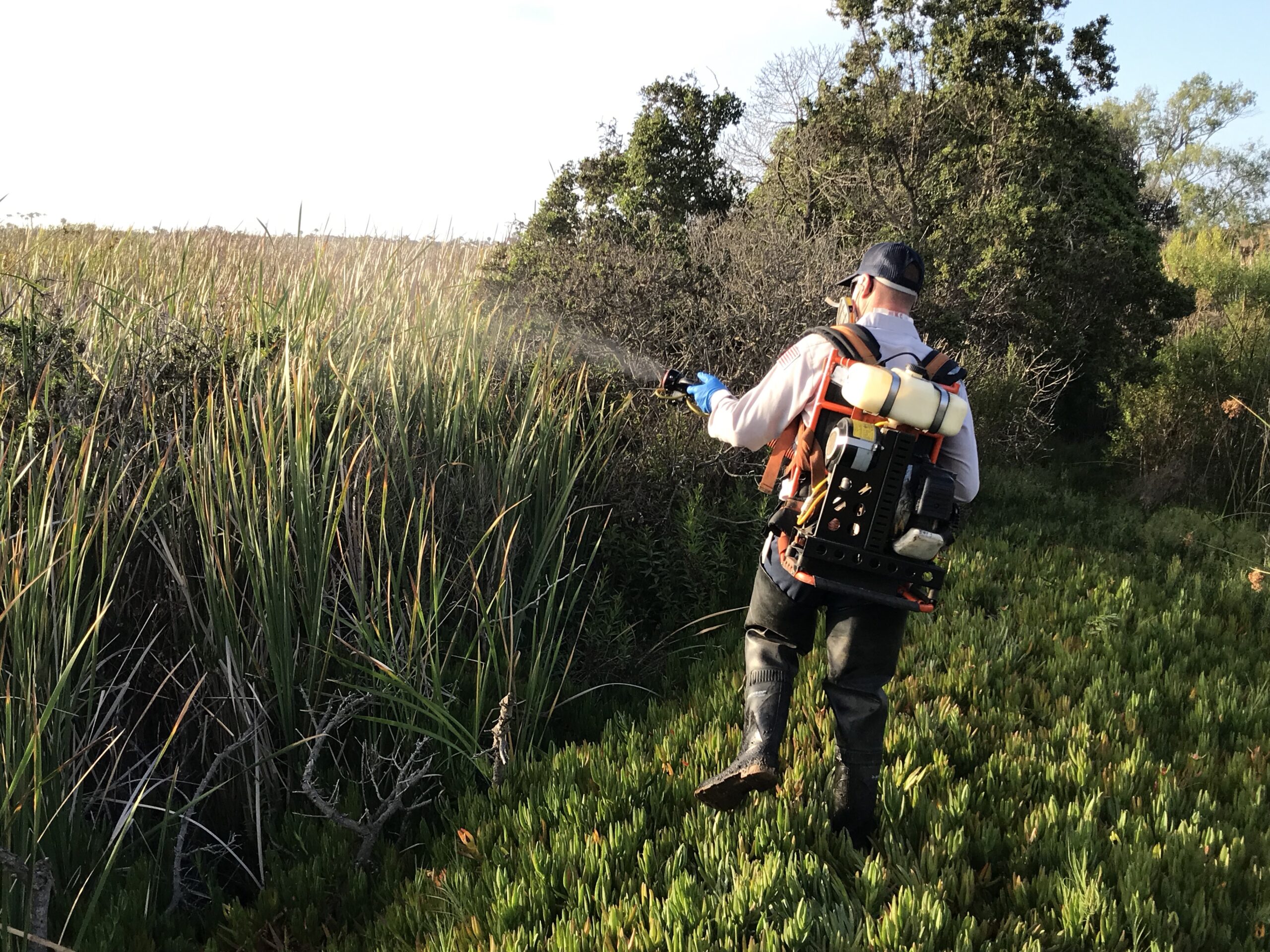
Adulticides are pesticides used to target the mature, adult stage of mosquitoes. Adulticides are typically applied to the air in very small amounts (less than 1 ounce per acre), called ultra-low volume (ULV) treatments, which can reduce adult mosquito populations over large areas.
Applying adulticides is the only way to quickly reduce a population of adult mosquitoes that spread diseases, like West Nile virus, to people. ULV treatments effectively reduce mosquito populations and rapidly reduce disease transmission risk and protect public health.
For additional information about public health pesticides click here.